
Commentary · 31 Aug 2026
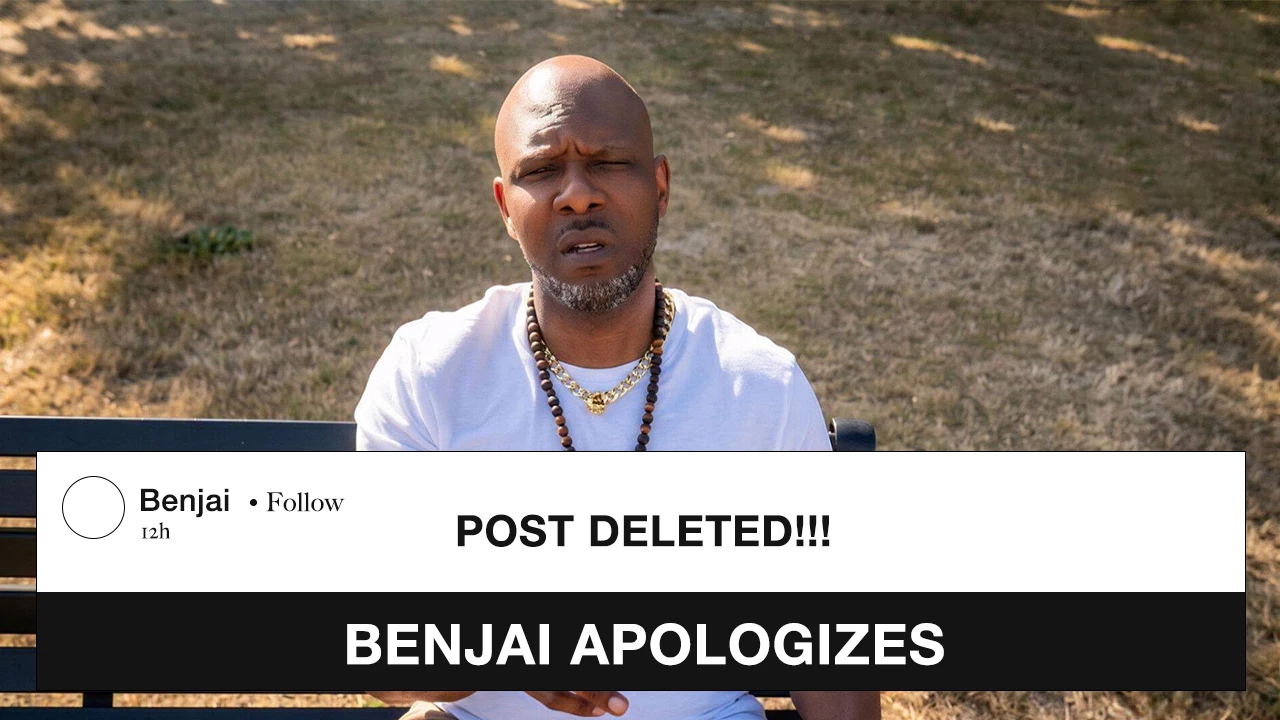
Soca artist Benjai posted, then deleted, a message accusing Indians in Trinidad of infiltrating Afrikan traditions — and apologized soon after, under pressure. This commentary argues he had nothing to apologize for, and traces the incident back to a specific event: Indian cultural performances inserted into the University of Trinidad and Tobago’s Emancipation Day program.
What did Benjai do?
Benjai, an Afrikan Trinidadian soca artist, posted that Afrikan traditions were being “infiltrated” by Indians who believe it’s their right to take part in them, naming soca and Emancipation specifically. The post read, in part, that Indians “will say they was slaves too” — a preemptive jab at the indentured-servitude comparison he expected in response.
The post was a direct response to Indian cultural performances included in UTT’s Afrikan Emancipation Day program. That Benjai felt pressured to apologize for what this piece treats as a valid criticism is, in itself, read here as evidence of anti-Blackness in Trinidad.
What happened at UTT?
Every August 1st has marked Emancipation Day since 1834, commemorating the Slavery Abolition Act of 1833 across the British colonies — a public holiday in Barbados, Jamaica, Grenada, Guyana, and Trinidad and Tobago. UTT’s program, “Uhuru: Celebrating Freedom,” was built for that occasion, yet it included Indian music and dance performances, drawing criticism the piece calls justified: Trinidad already has a separate Indian Arrival Day, and those events are never disrupted by unrelated inclusions in reverse.
UTT has not reversed course. Executive chairman Selwyn Cudjoe — whose surname is a Caribbean form of the Akan day-name Kojo — defended the choice as “multiculturalism” and confirmed Indian cultural acts would continue at future Emancipation Day events, a stance read here as exposing a power imbalance between Indian and Black communities in Trinidad, with parallels drawn to Kenya and South Africa.
NoteThe author spells “Afrika” with a k to reflect Black pronunciation, and uses Afrikan and Black interchangeably. Historically anti-Black nations are written here in lowercase rather than capitalized.
“We doh see color”
The framework of “oppression” is treated here as distorting more than it clarifies. When the primary agent of anti-Blackness is a non-white group — Indians, in this case — that anti-Blackness tends to go unnoticed, because the language of “oppressed groups” centers a people’s condition rather than their cultural particularity. Indentured servitude and the enslavement and colonization of Afrikan people are framed as categorically different levels of oppression, and treating racism as exclusively a white phenomenon is said to obscure anti-Blackness coming from non-white sources.
Trinidad’s multiculturalism discourse gets the same treatment, with Machel Montano’s “Famalay” singled out as an example of the sentiment: rather than naming and celebrating Blackness as the source of the genre, the song is read as substituting a colorblind “we doh see race” for actual cultural specificity — a colonial pattern reproduced, notably, through an Afrikan musical form itself, and one described as deeply internalized within the Afrikan community.
What is Trini culture?
Drawing on Cheikh Anta Diop’s three aspects of culture — historical, psychological, and linguistic — Trinidad is read as based in Afrikan culture on the historical and psychological fronts, given the enslavement economy that made Afrikans the island’s major population; what’s Eurocentric is the infrastructure built by French and British enslavers, not the culture itself. Shango traditions and the Jumbi of Carnival are offered as examples of that Afrikan cultural (sub)conscious persisting with regional particularity.
Linguistically, Trinidad has two Ebonics languages — contact languages carrying Afrikan grammar: Trini Talk (commonly known as creole) and the endangered Patwa Trinidad (commonly known as kwéyòl). And on Carnival specifically, the piece pushes back against a charge of “essentialism” leveled at the author in conversation: Carnival could exist without non-Afrikan contributions, the argument goes, but strip out its Afrikan element and it stops being Carnival — a lineage traced through West and West Central Afrika back to the Itru Hapi civilization of Kemet.
Wait a minute — they will say they was slaves too.
Benjai — deleted social media post
Verdict
The piece concludes that Benjai was correct on the basis of a simple premise: Afrikan culture should be for Afrikan people. That he felt compelled — by coercion or pressure — to apologize for saying so is treated as the real story, set against UTT’s continued insistence on including Indian cultural acts in an Emancipation Day ceremony built to commemorate Afrikan freedom.
Terms used in the piece
- Ebonics A term coined by psychologist Robert Williams for Afrikan contact languages in the western hemisphere, centering their Afrikan grammar rather than framing them as deviant forms of European languages.
- Trini Talk Trinidad’s widely-spoken Ebonics language, commonly known outside Afrocentric scholarship as Trinidadian creole.
- Patwa Trinidad Trinidad’s endangered French-lexified Ebonics language, commonly known as kwéyòl.
- Anti-Blackness Used here in place of the broader “oppression” framework, to keep racism against Afrikan people analytically distinct from other groups’ historical conditions, including non-white ones.